

Featured in Falstaff PROFI

Why Lived Culture Is the Strongest Recruiting Tool in Hospitality
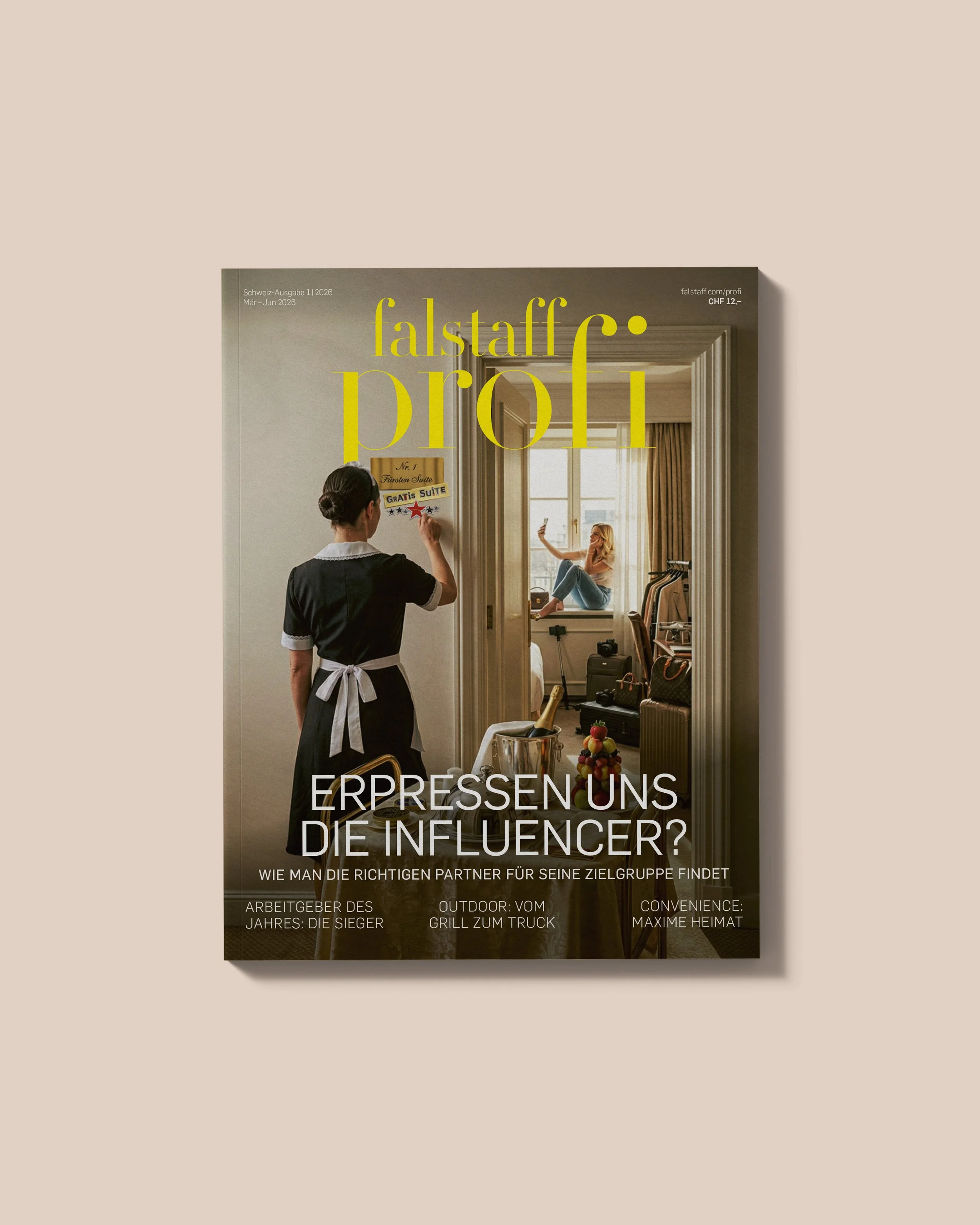
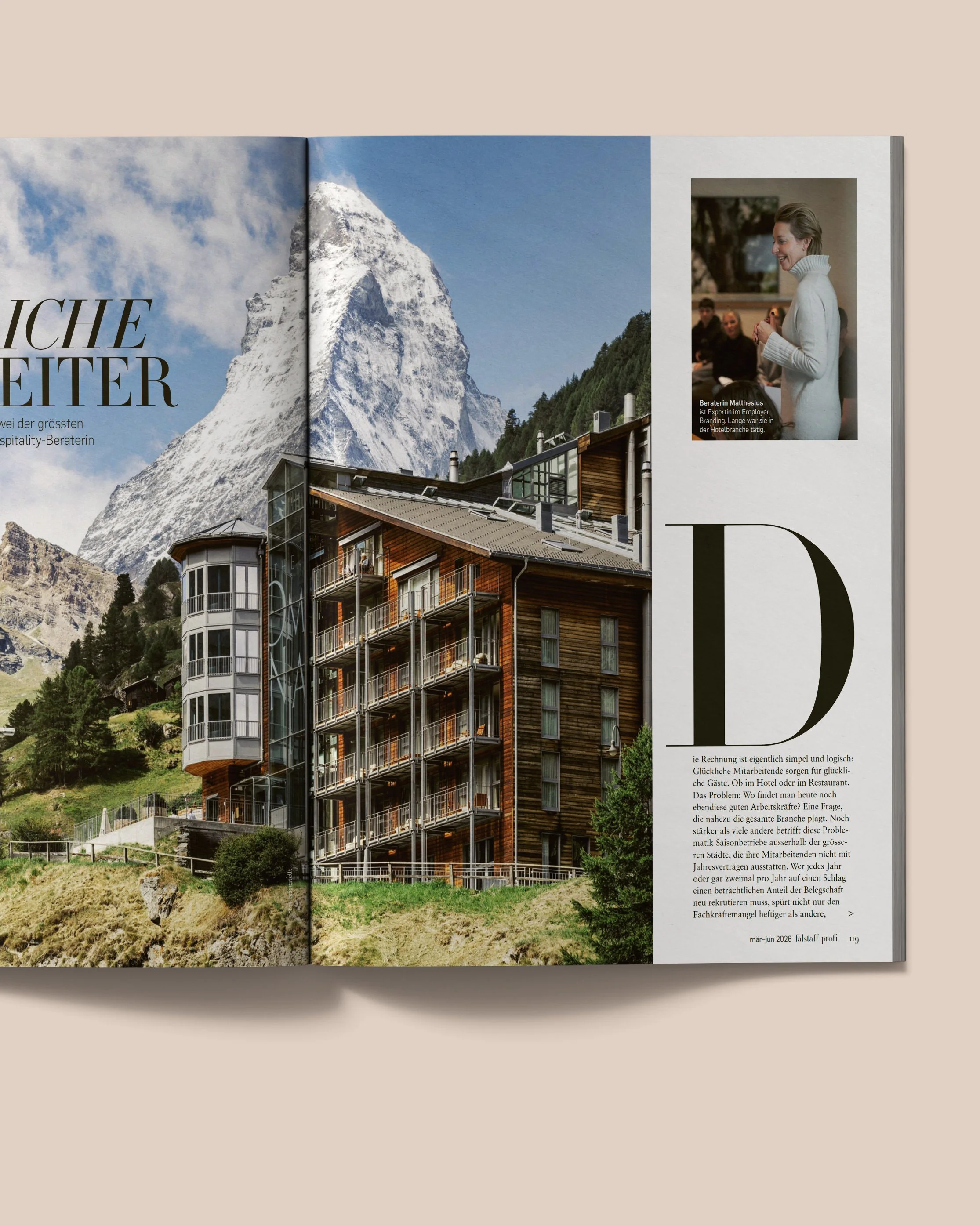
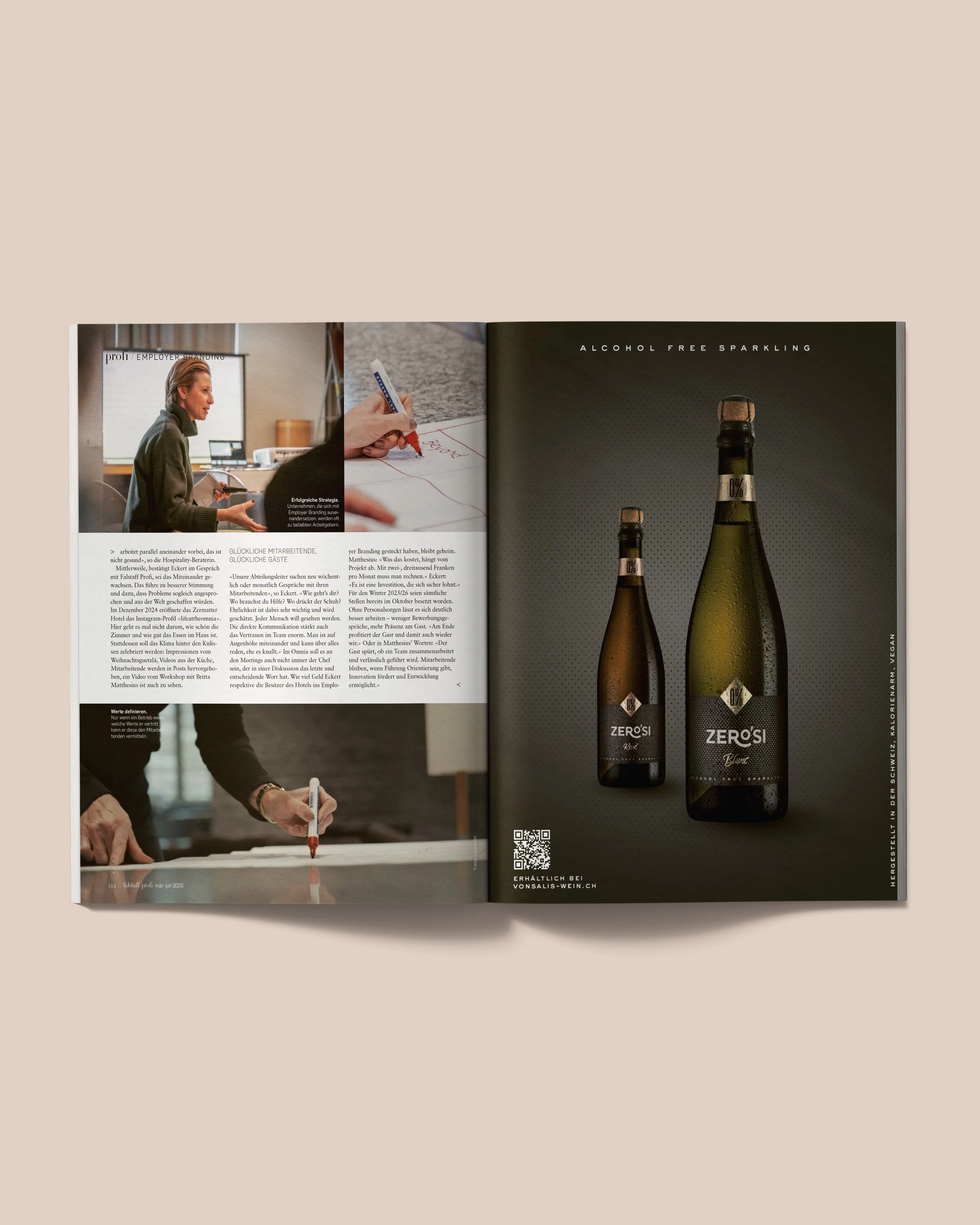
I am truly happy and grateful that my work with NOUWORK and the collaboration with THE OMNIA in Zermatt were featured in the first Swiss edition of Falstaff PROFI Magazine.
Seeing this topic represented there means a lot to me. Because at the heart of my work is one clear belief: culture is not a soft factor — it is a competitive advantage. When a company consciously shapes its culture, it does not just improve the employee experience. It strengthens its attractiveness as an employer and, ultimately, elevates the guest experience as well.
Happy employees are not a coincidence — they are a strategic choice. The equation is actually quite simple: happy employees create happy guests.
And yet, especially for seasonal businesses outside major cities, the shortage of skilled talent remains one of the biggest challenges of our time. This is exactly where employer branding becomes so relevant — not as a trend, but as a strategic response to a very real business challenge.
THE OMNIA as a powerful example of cultural transformation. My collaboration with THE OMNIA in Zermatt is a meaningful example of what can happen when hospitality businesses decide to actively shape their culture.
The starting point was a clear staffing challenge. Together, the goal was equally clear:
to position the hotel as an attractive employer, attract qualified talent, and retain people in the long term.
What emerged from this work went far beyond traditional recruiting. It became a process of making visible — internally and externally — what the hotel truly stands for and how that culture is experienced in everyday life.
What strong employer branding looks like in practice
This project showed once again that employer branding only works when it is not just communicated, but truly lived.
That included several important elements:
Networks instead of relying only on traditional job portals
The focus shifted more strongly toward LinkedIn and authentic employee advocacy. Because often, the most credible ambassadors of a company are the people already working there.
A shared vision that includes everyone
Cross-departmental workshops brought employees into the process — from housekeeping to management. That level of involvement creates alignment, ownership, and emotional connection.
Communication at eye level
Regular, honest dialogue between leaders and teams helped build trust, address challenges earlier, and create a stronger sense of mutual support.
Authentic insights instead of polished perfection
On social media, the focus was not only on beautiful settings or curated visuals, but on real team moments behind the scenes. That authenticity is what makes an employer brand believable.
The most important question: how does it truly feel to work here?
For me, employer branding never starts with a social media post and never with a career page alone. It starts with questions such as:
What do we truly stand for?
Is our direction visible and understood by everyone?
Does every person know the value of their contribution?
How do we treat one another, especially in stressful moments?
Can people rely on us — and do we understand their needs beyond the job itself?
These questions may sound simple. But they are powerful. Because they lead to the place where employer attractiveness is really created: through clarity, behaviour, trust, and lived culture.
I am grateful for this feature, for the conversations behind it, and for the trust to help shape these kinds of transformations. Thank you to the Falstaff PROFI team!